A technically clearer route from a general electrode enquiry to an order-ready product specification
A diathermy electrode should be selected as part of a complete electrosurgical configuration. Working-end shape, energy modality, shaft dimensions, insulation, connection, access route, use format and compatible equipment all affect the product a buyer needs. Cosil Instruments manufactures and supplies active monopolar electrodes, non-stick electrodes, ENT bipolar electrodes, arthroscopic electrodes and laparoscopic electrodes for professional surgical buyers.
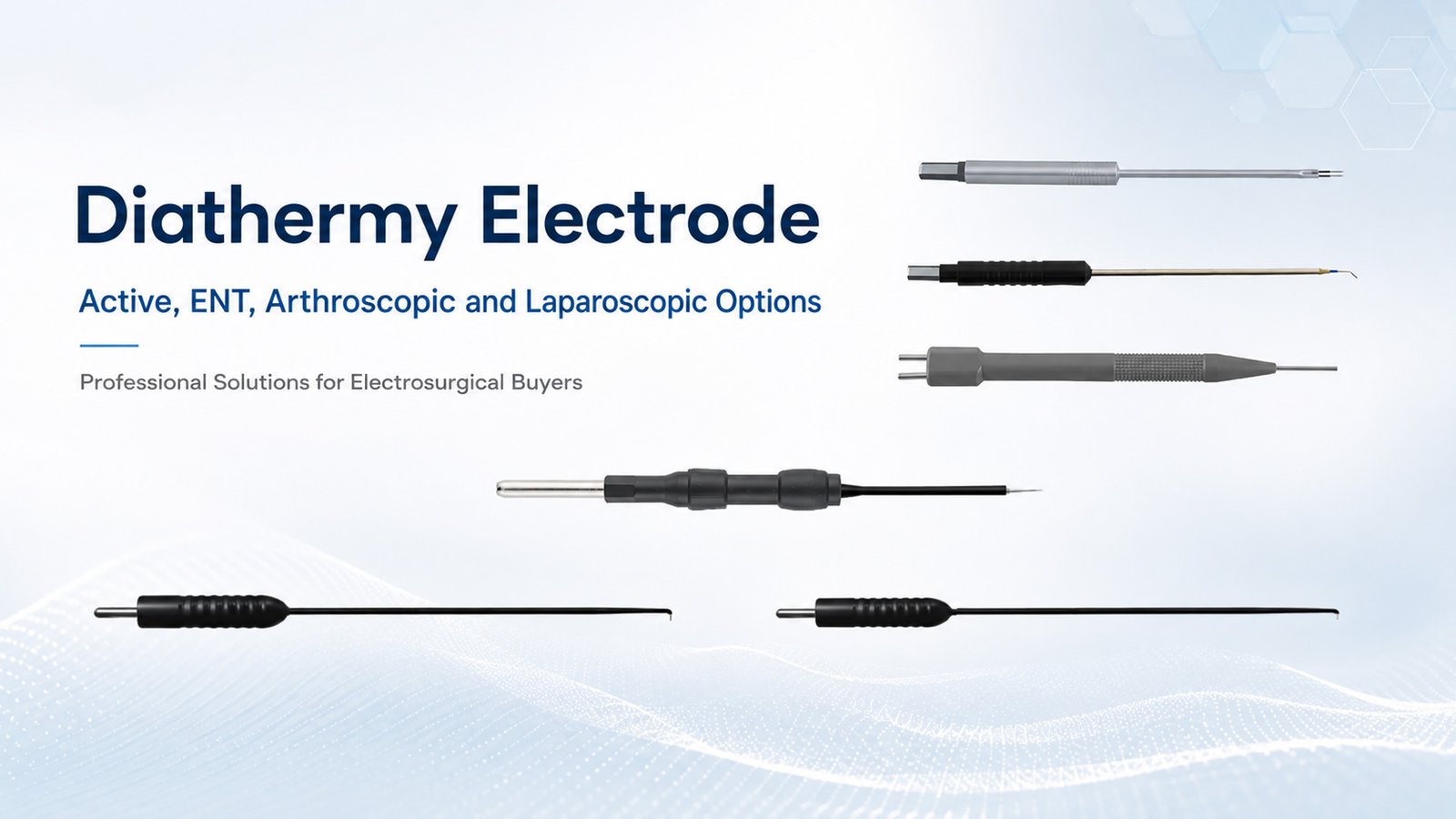
A diathermy electrode is the active instrument component selected according to monopolar or bipolar energy delivery, working-end geometry, shaft dimensions, access route and equipment connection. Cosil Instruments supplies active monopolar, non-stick, ENT bipolar, arthroscopic and laparoscopic electrode families in reusable and single-use configurations, subject to exact model and packaging confirmation.
Understanding the Diathermy Electrode Category
The phrase diathermy electrode covers a broad group of products. It may describe a standard active electrode fitted to a cautery pencil, a fine specialised electrode, a bipolar ENT instrument, an arthroscopic electrode or an extended laparoscopic configuration.
These products should not be grouped only by appearance. Two electrodes with similar working ends may have different shaft diameters, insulation boundaries, lengths or connections. An electrode designed for one handpiece or generator arrangement should not be assumed to fit another.
Cosil’s electrode families sit within its wider electrosurgical instruments and accessories range. Buyers can discuss electrodes together with cautery pencils, generators, cables, plugs, bipolar forceps and patient return pads.
Diathermy Electrodes Supplied by Cosil Instruments
Active Monopolar Electrodes
Cosil’s catalogue contains a substantial range of active monopolar electrodes. Working-end forms include needle, knife, blade, lancet, ball, spatula and wire-loop configurations. Straight and angled options are represented, together with multiple shaft formats.
The working-end name is only the start of the specification. Buyers should also identify the shaft diameter, overall or working length, angle, insulation, handpiece interface and reusable or single-use requirement.
Non-Stick Electrode Options
Cosil also presents C-Tech non-stick electrodes in several working-end forms. A non-stick requirement should be stated explicitly and linked to an exact product description. Buyers should request current technical information for the relevant model rather than assuming that “non-stick” describes one universal construction.
ENT Bipolar Electrode Options
The correct product term is ENT Bipolar Electrode. Cosil’s catalogue includes straight and angled bipolar ENT configurations with different working-end profiles. Because these are bipolar products, their connection and compatible equipment requirements differ from standard monopolar active electrodes.
An ENT enquiry should state the required angle, shaft or instrument length, tip dimensions, handle or cable arrangement, bipolar connector and required use format. Where an existing product is being replaced, an approved reference or drawing can reduce ambiguity.
Arthroscopic Electrodes
Arthroscopic electrodes are specialised products whose working-end geometry, shaft, insulation and connection must be defined together. Cosil’s catalogue presents needle, knife, button, ball and other working-end configurations across this family.
A buyer should identify the intended equipment relationship and access requirements rather than selecting from the tip name alone. Any proposed product should pass the buyer’s normal technical and clinical review before procurement.
Laparoscopic Electrodes
Cosil supplies laparoscopic electrodes in configurations with and without suction. Catalogue working ends include ball, needle, spatula and hook forms. The quotation should clearly state whether suction is required, as well as the shaft dimensions, working-end profile and connection.
Extended instruments require particular attention to effective length, insulation and interface details. A generic request for a “long electrode” is unlikely to provide enough information for accurate product matching.
Electrode Families at a Glance
| Electrode family | Available considerations | Essential buyer checks |
| Active monopolar electrode | Needle, blade, knife, ball, spatula, lancet and loop forms | Working end, shaft, insulation, handpiece and generator connection |
| Non-stick electrode | Several fine and general working-end configurations | Exact product reference, tip construction, shaft and use format |
| ENT Bipolar Electrode | Straight, curved and angled bipolar configurations | Tip dimensions, angle, bipolar connection and compatible equipment |
| Arthroscopic electrode | Needle, knife, button, ball and specialised working ends | Shaft, insulation, access requirement, connector and equipment |
| Laparoscopic electrode | Ball, needle, spatula and hook options, with or without suction | Length, shaft, suction requirement, connection and use format |
How to Specify an Electrosurgical Electrode
Start with the Energy Modality
Identify whether the requirement is monopolar or bipolar. This determines the basic energy arrangement and narrows the relevant instrument, connector and equipment family. A product should never be assigned to a modality based only on visual similarity.
Define the Working-End Geometry
Needle, knife, blade, ball, spatula, hook and loop electrodes perform different instrument functions and should be described accurately. For loop electrodes, shape and dimensions are especially important because circular, triangular, rhombic and other profiles are not interchangeable purchasing descriptions.
Record Shaft Diameter and Length
Shaft dimensions affect handpiece fit, access and product identification. State measurements in millimetres and distinguish between overall length, shaft length and working length where applicable.
Identify Straight or Angled Construction
For an angled electrode, record the angle and where it occurs. A photograph beside a measurable scale, approved drawing or existing reference can help when catalogue terminology differs between suppliers.
Confirm Insulation Boundaries
The quotation should identify whether an insulated shaft is required and which area is intended to remain exposed. Buyers should request the current technical specification for the exact reference rather than relying on a product photograph.
Match the Handpiece, Cable and Generator
Electrode compatibility extends through the handpiece or cable to the generator. Shaft fit, connector configuration and equipment requirements should be checked together. Cosil’s diathermy accessories buying guide explains why accessory sourcing should follow a compatibility chain.
Confirm Reusable or Single-Use Supply
Cosil’s catalogue represents both multi-use and single-use electrode formats. Buyers should confirm the intended use status, packaging, sterile status where applicable, reprocessing information for reusable products and documentation for the exact reference.
Cosil procurement insight: An electrode should be described from its working end back to the generator: tip geometry, shaft, insulation, handpiece or cable, connector and equipment reference.
Why Electrode Compatibility Requires a Complete Chain
A common procurement error is to check only whether an electrode fits into a handpiece. Physical fit is necessary, but it is not the whole compatibility decision. The buyer should examine:
- The electrode’s energy modality
- The working-end and shaft specification
- The electrode-to-handpiece interface
- The handpiece or cable connection
- The generator manufacturer and model
- The control method
- Any applicable patient return electrode requirement
- The current product and equipment documentation
Where the buyer cannot provide an exact connector name, clear images of the connector and equipment socket should accompany the enquiry. Equipment information should be reviewed by appropriately qualified personnel before approval.
Single-Use and Reusable Diathermy Electrodes
The preferred supply format depends on the purchasing organisation’s established processes. Single-use electrodes require consumption forecasting, packaging review and stock rotation. Reusable electrodes require validated reprocessing instructions, inspection arrangements and a replacement plan.
- Confirm the use status for every product reference.
- Do not infer sterile status from the phrase “single-use”.
- Request packaging and labelling details for the destination market.
- For reusable electrodes, review the current cleaning, disinfection and sterilisation information.
- Keep single-use and reusable references clearly separated in catalogues and stock systems.
Who Buys Diathermy Electrodes?
Hospitals and Clinics
Hospital procurement teams may need to coordinate with theatre personnel, clinical engineering and other authorised reviewers. Product references, equipment compatibility, packaging and documentation should be agreed before routine purchasing begins.
Medical Distributors
Distributors can organise their range by energy modality, application family, working-end form, shaft, use status and compatible connection. This creates a catalogue that is easier to quote than an undifferentiated list of electrodes.
UK buyers can review Cosil’s established page for diathermy electrode supply to the UK market. The regional page complements this product hub with distributor and procurement context.
Importers and Procurement Companies
Importers often require carton information, documentation, labelling and product-reference control alongside the technical specification. Consolidated enquiries should preserve a separate line for every electrode variation.
OEM and Private-Label Buyers
OEM feasibility depends on the product design, required quantity, packaging, branding and target-market documentation. Buyers should submit an existing specification or controlled drawing where possible.
Sourcing Electrodes as Part of a Connected Product Range
Diathermy electrodes are commonly purchased with:
- Hand-control cautery pencils
- Foot-control cautery pencils
- Detachable cautery handpieces
- Electrosurgical generators
- Diathermy cables and plugs
- Patient return electrode pads
- Bipolar and monopolar forceps
Sourcing related categories from one manufacturer can support product-range planning and communication. It does not replace product-by-product compatibility checks. Every connector, shaft interface and equipment relationship should be recorded.
Request a Diathermy Electrode Quotation
Provide the following information when contacting Cosil Instruments:
- Monopolar or bipolar modality
- Electrode family and working-end shape
- Straight or angled configuration
- Shaft diameter and required length
- Insulation requirement
- Handpiece, cable and connector details
- Generator manufacturer and model
- Single-use or reusable format
- Sterile and packaging requirements where applicable
- Approximate quantity and destination
For specialised ENT, arthroscopic or laparoscopic products, include an approved reference, drawing or clear product images. This enables a more accurate comparison before quotation.
Frequently Asked Questions About Diathermy Electrodes
Which diathermy electrode types does Cosil supply?
Cosil supplies active monopolar, non-stick, ENT bipolar, arthroscopic and laparoscopic electrode families. Working ends include needle, knife, blade, ball, spatula, hook, lancet and loop configurations.
What information is needed to identify a compatible electrode?
Provide the energy modality, working-end form, shaft dimensions, insulation, handpiece interface, cable or connector and generator details. An existing reference or drawing is useful when replacing another product.
Are single-use active electrodes available?
Single-use options are represented across Cosil’s electrode catalogue. Buyers should confirm the available reference, packaging, sterile status and documentation for the required configuration.
Does Cosil supply ENT Bipolar Electrode options?
Yes. The catalogue includes straight and angled bipolar ENT configurations. The enquiry should state the tip, angle, instrument dimensions, connector and use format.
Are laparoscopic electrodes available with suction?
Cosil’s catalogue includes laparoscopic electrode configurations with and without suction. Buyers should specify the required working end, shaft dimensions, suction arrangement and equipment connection.
Can a visually similar electrode be used with our existing handpiece?
Visual similarity is not sufficient evidence of compatibility. Shaft fit, modality, connection, insulation and equipment documentation should all be checked before approval.
Can distributors request a mixed electrode range?
Yes. Submit each variation on a separate line with its working end, shaft, use status, connector, packaging and quantity. Cosil can then prepare a structured product and commercial response.
Discuss Your Diathermy Electrode Requirements
Cosil Instruments supports hospitals, distributors, procurement organisations, importers and OEM buyers with manufacturer-direct diathermy electrode supply. To request product references, compatibility information, catalogue details or a quotation, contact Cosil Instruments.
A detailed enquiry helps Cosil identify the relevant product family and prevents a general electrode request from becoming an inaccurate quotation.