Compare the working end, shaft, access profile and connection before choosing an electrode
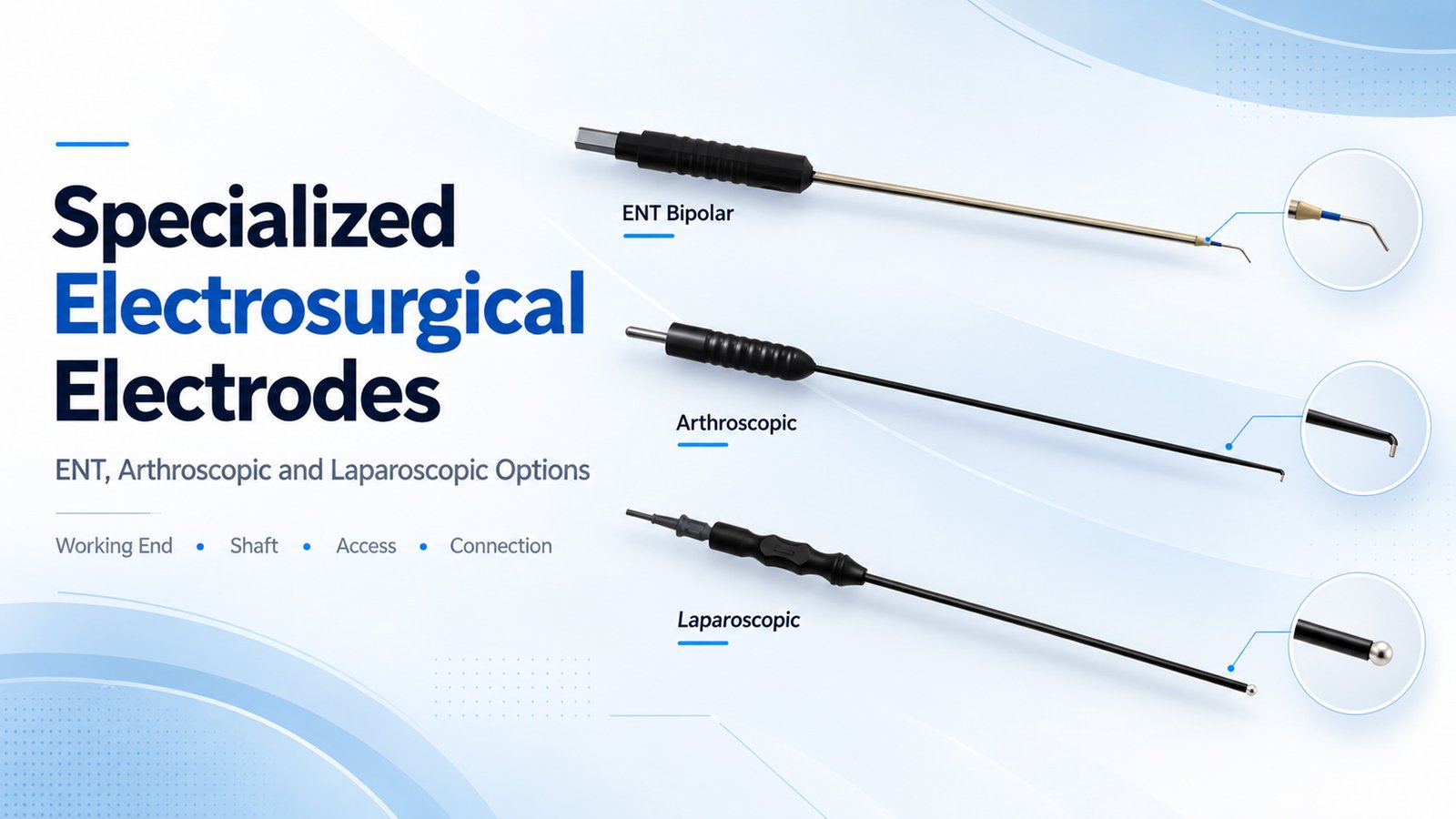
Specialised electrosurgical electrodes are designed around distinct access routes, working-end shapes and equipment connections. ENT bipolar, arthroscopic and laparoscopic electrodes should therefore be specified as separate product groups rather than treated as interchangeable extensions of a standard active-electrode range.
Cosil Instruments supplies ENT bipolar electrodes, arthroscopic electrodes and laparoscopic electrodes in multiple working configurations. Professional buyers should compare the electrode type, shaft dimensions, working-end geometry, angle, suction requirement, connection, use classification and documentation for each selected reference.
Specialised Electrode Categories from Cosil Instruments
Cosil’s electrosurgical portfolio includes active monopolar electrodes, non-stick electrodes, microdissection needle electrodes and more specialised products for ENT, arthroscopic and laparoscopic requirements. The official Cosil Instruments catalogue should be used to shortlist references before requesting current technical information.
| Electrode category | Catalogue variations | Key procurement questions |
| ENT bipolar electrodes | Straight, curved, angled and concentric configurations | Is bipolar connection confirmed, and what tip angle and handpiece relationship are required? |
| Arthroscopic electrodes | Needle, knife, button, ball and other specialised working ends | What shaft, angle, handle, use status and connector are specified? |
| Laparoscopic electrodes | Ball, needle, spatula and hook working ends, with or without suction | What working length, diameter, suction arrangement and equipment connection are required? |
These descriptions identify the broad category only. The exact product code, dimensions, material description, use status, packaging and compatibility must be confirmed before purchase.
ENT Bipolar Electrode Options
The correct product term is ENT Bipolar Electrode. Cosil’s catalogue presents bipolar ENT electrode configurations in different working-end forms and angles, including straight, curved, short-angled, long-angled and concentric variants.
Some references are described with steel or Teflon-related variants in the catalogue. Buyers should request the current material and construction description for the exact product rather than applying one description to the whole category.
What ENT buyers should specify
- Required bipolar electrode configuration
- Tip form and dimensions
- Straight, curved or angled working end
- Required angle or orientation
- Handpiece or handle relationship
- Connection to the intended equipment
- Single-use or reusable requirement
- Packaging and documentation needs
Clinical suitability must be assessed by qualified personnel within the purchasing organisation. Cosil can support product identification and documentation but should not be treated as a substitute for the buyer’s clinical or technical approval process.
Arthroscopic Electrode Options
Arthroscopic electrode selection is strongly influenced by working-end geometry and access configuration. Cosil’s catalogue includes needle, angled needle, knife, button, ball and other specialised forms. Certain references are shown with handles, while others require reference-specific review of the intended connection.
Needle and knife electrodes
Needle and knife working ends appear in straight or angled forms. Buyers should specify the required angle, shaft dimensions and handle arrangement, then confirm the corresponding product code.
Button and ball electrodes
Button and ball configurations differ in working-end geometry and should not be grouped under a generic rounded-electrode description. Dimension, angle, shaft and use status remain important purchasing details.
Reference-specific use classification
Cosil’s arthroscopic catalogue contains references marked as single-use and others marked for multi-use. That status must be confirmed for each selected item. Packaging, sterile status, instructions and any reprocessing information must also be verified from current reference-specific documentation.
Cosil procurement insight: Specialised electrode enquiries are most accurate when the buyer names the access category first, then defines the working end, angle, shaft, handle and equipment connection.
Laparoscopic Electrode Options
Cosil presents laparoscopic electrodes with and without suction. Catalogue working ends include ball, needle, spatula and hook configurations. Because the electrode may form part of a longer access instrument, working length and shaft dimensions must be included in the buying specification.
Laparoscopic electrodes without suction
These references should be compared by working-end form, length, diameter, connection and intended use classification. An existing product reference or measured specification can help Cosil identify a relevant option.
Laparoscopic electrodes with suction
A suction-enabled configuration introduces another product relationship that must be defined accurately. Buyers should state the required electrode working end, shaft dimensions, suction connection and any equipment or tubing details needed for technical review.
“With suction” should not be treated as sufficient information for an order. The complete product code and current specification remain necessary.
Working-End Geometry Across the Wider Electrode Range
Cosil’s wider diathermy portfolio contains multiple electrode forms, including:
- Needle and microdissection needle
- Knife and blade
- Lancet
- Ball and button
- Spatula
- Loop and ribbon loop
- Hook
- Angled and insulated working ends
These working-end names describe shape rather than complete compatibility. The shaft diameter, working length, insulation, handpiece relationship and generator connection still need to be confirmed.
A Practical Electrode Selection Framework
- Identify the product category. Confirm whether the requirement is ENT bipolar, arthroscopic, laparoscopic, active monopolar, non-stick or microdissection.
- Define the working end. State the required needle, knife, ball, button, spatula, loop, hook or other geometry.
- Specify the angle. Record whether the working end is straight or angled and provide the required orientation where known.
- Record shaft dimensions. Include working length and shaft diameter rather than using general terms such as long or narrow.
- Confirm the connection. Identify the handpiece, cable or generator relationship.
- Confirm the use classification. Request reference-specific confirmation of single-use or reusable status.
- Review packaging and documents. Request current labelling, instructions, sterile-status evidence and any other documents needed by the buyer.
Compatibility Is a Connected-System Question
An electrode cannot be declared compatible simply because its shaft appears to fit a handpiece. Compatibility review may involve the electrode shaft, handpiece, cable, generator connection and the generator’s approved accessory information.
When requesting compatibility support, send:
- Electrode product code or dimensional specification
- Handpiece manufacturer and reference
- Cable or connector information
- Generator manufacturer and full model
- Photographs of relevant connections where requested
- Existing accessory references used by the organisation
Cosil’s diathermy accessory buying guide provides additional guidance for evaluating connected products.
Procurement for Hospitals and Specialist Clinics
Hospital buyers may need to replace an established electrode, evaluate an additional configuration or consolidate several products under one supply arrangement. The purchasing process should preserve reference-level distinctions so that working ends, dimensions and connections are not confused.
A hospital enquiry should identify the requesting department, approved product requirement, expected volume and supporting documents needed for evaluation. Clinical and technical stakeholders should review suitability before procurement approval.
Portfolio Planning for Medical Distributors
Distributors do not necessarily need every working-end variation in opening stock. A more commercially disciplined approach is to identify recurring customer requirements and organise the catalogue by application category, use classification, shaft and connection.
Product records should avoid combining ENT bipolar, arthroscopic and laparoscopic electrodes under one generic description. Accurate classification helps sales teams ask better questions and reduces the risk of quoting an unsuitable alternative.
Swiss distributors can review Cosil’s established information on diathermy electrode sourcing in Switzerland, while UK buyers can explore diathermy electrodes for UK procurement.
OEM and Private-Label Electrode Requirements
OEM discussions should begin with a detailed reference, technical drawing, sample or complete specification. Requirements may cover the working end, shaft, handle, connection, packaging, branding, quantity and destination-market documentation.
Custom supply is subject to technical and commercial review. Buyers should not assume that an existing electrode can be modified or privately labelled without confirming feasibility and applicable documentation requirements.
Request Specialised Electrode Information
For an accurate quotation, send:
- ENT bipolar, arthroscopic or laparoscopic category
- Required working-end shape
- Straight or angled configuration
- Shaft diameter and working length
- Handle, suction or handpiece requirement
- Generator and connection information
- Single-use or reusable preference
- Estimated quantity and destination
- Packaging, labelling and documentation requirements
If a Cosil catalogue reference has already been identified, include it in the enquiry. If not, provide a clear product description and any existing reference information available.
Frequently Asked Questions
What specialised electrosurgical electrodes does Cosil supply?
Cosil’s catalogue includes ENT bipolar, arthroscopic and laparoscopic electrodes, alongside active monopolar, non-stick and microdissection needle options.
What is the correct spelling of ENT Bipolar Electrode?
The correct term is “ENT Bipolar Electrode”. Buyers should use accurate terminology together with the required angle, tip, connection and product code.
Are arthroscopic electrodes available with different working ends?
Yes. The current catalogue includes needle, knife, button, ball and other specialised configurations. Dimensions and use status vary by reference.
Does Cosil offer laparoscopic electrodes with suction?
Cosil presents laparoscopic configurations with and without suction. Buyers should confirm the working end, shaft, suction arrangement, connection and current specification.
Are specialised electrodes single-use or reusable?
The catalogue contains different use classifications across the electrode range. Single-use or reusable status must be confirmed for each product reference.
What is needed to check electrode compatibility?
Provide the electrode specification, shaft dimensions, handpiece or cable information, generator manufacturer and generator model. The buyer should complete its own technical approval before ordering.
Discuss Your Specialised Electrode Requirements
Cosil Instruments supports hospitals, specialist buyers, distributors and OEM partners sourcing specialised electrosurgical electrodes. Contact Cosil Instruments with the electrode category, working end, dimensions, connection, quantity, destination and documentation needs to request current specifications and a quotation.