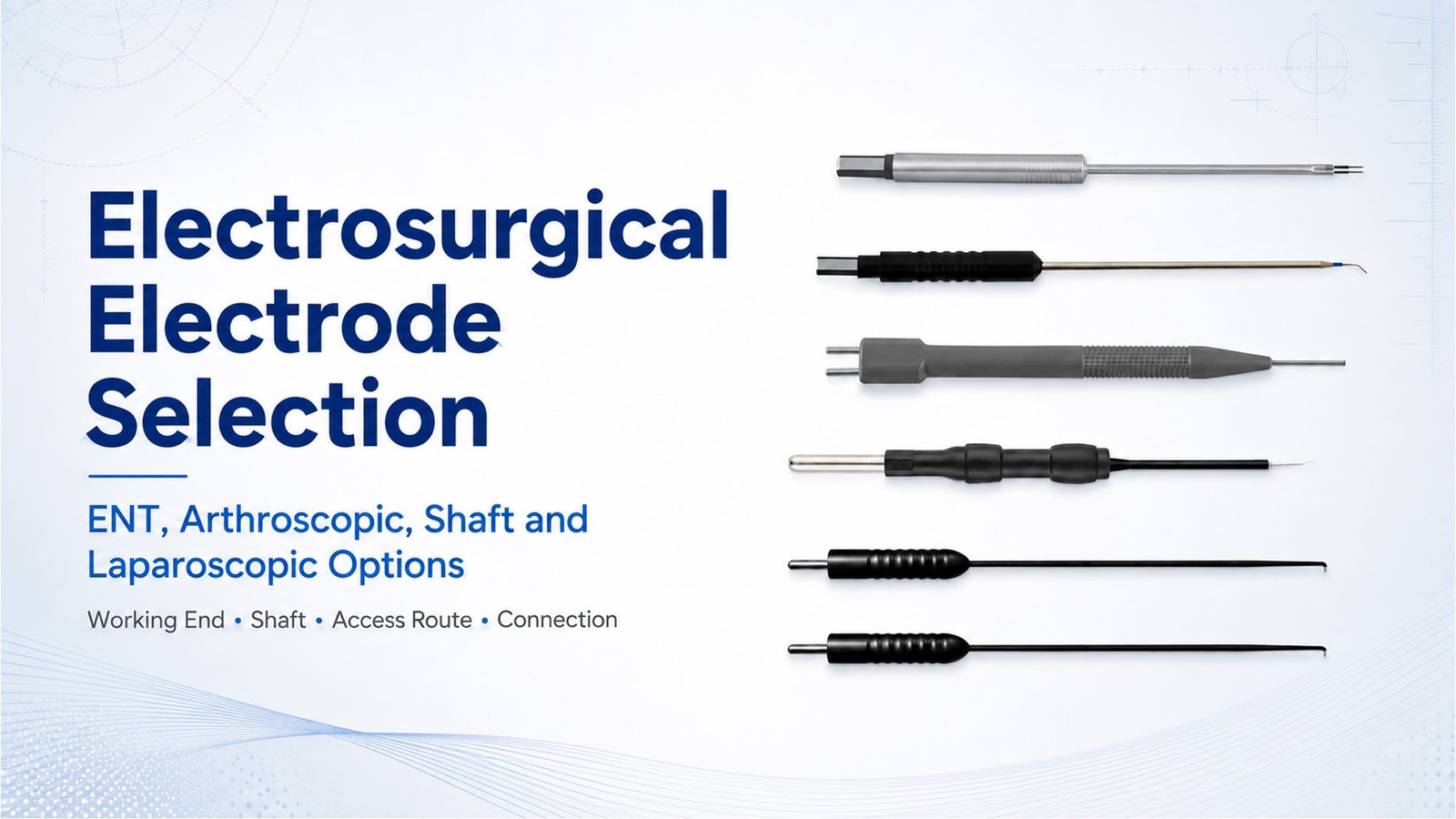
Specify the working end, access route, shaft and connection before choosing an electrode reference
Electrosurgical electrode selection should begin with the required modality and instrument configuration, not a product photograph. An ENT Bipolar Electrode, arthroscopic electrode, standard active electrode, electrode shaft and laparoscopic electrode may each require different working ends, dimensions, insulation and equipment connections. Cosil Instruments supplies these electrode families for professional distributors and healthcare buyers.
Select an electrosurgical electrode by identifying the monopolar or bipolar modality, working-end geometry, shaft diameter and length, insulation, access route, handpiece or cable interface and compatible generator. Cosil supplies active, ENT bipolar, arthroscopic and laparoscopic options in reusable and single-use configurations, subject to exact reference confirmation.
Begin with the Electrode Family
Cosil’s electrosurgical product range includes several electrode groups. Separating the family first makes later decisions more accurate.
Active Monopolar Electrodes
Active electrodes include needle, knife, blade, lancet, ball, spatula and wire-loop working ends. They may be straight or angled and are available with different shaft dimensions.
ENT Bipolar Electrodes
An ENT Bipolar Electrode uses a bipolar configuration and should be specified by working-tip dimensions, angle, instrument length, handle or cable and connector.
Arthroscopic Electrodes
Cosil’s arthroscopic range includes needle, knife, button, ball and specialised working ends. Shaft, insulation, access requirement and equipment relationship should be reviewed together.
Laparoscopic Electrodes
Laparoscopic options include ball, needle, spatula and hook working ends. Cosil’s catalogue presents configurations with and without suction.
Electrode Selection Matrix
| Electrode family | Primary variables | Information to send Cosil |
| Active monopolar | Working end, shaft, angle and insulation | Handpiece, generator, use status and dimensions |
| ENT bipolar | Tip, angle, instrument length and bipolar connection | Equipment, connector, product reference and quantity |
| Arthroscopic | Working end, shaft, access and equipment interface | Generator details, dimensions and intended configuration |
| Laparoscopic | Length, working end, shaft and suction requirement | With or without suction, connector, use format and equipment |
| Replacement shaft or electrode | Diameter, length, exposed area and interface | Existing reference, drawing, handpiece and connector |
Step 1: Confirm Monopolar or Bipolar Modality
Modality establishes the basic system relationship. A monopolar active electrode should not be confused with a bipolar ENT instrument simply because their shafts or working ends appear similar.
Include the modality in the product name and quotation line. This helps sales, procurement and technical teams avoid ambiguity.
Step 2: Select the Working-End Geometry
Common Cosil working-end forms include:
- Needle electrodes
- Knife and blade electrodes
- Lancet electrodes
- Ball electrodes
- Spatula electrodes
- Wire and ribbon-loop electrodes
- Button electrodes
- Hook electrodes
For a loop, state its shape and dimensions. For an angled needle or knife, state the angle. A descriptive name without measurements may not be sufficient for product matching.
Step 3: Define the Electrode Shaft
The electrode shaft affects handpiece fit and product identification. Buyers should specify:
- Shaft diameter
- Overall and working length
- Insulated and exposed sections
- Straight or angled construction
- Handpiece interface
If an existing electrode is being replaced, send a controlled drawing, approved sample information or clear images with measurements.
Step 4: Identify the Access Requirement
Standard active, ENT, arthroscopic and laparoscopic products are designed around different instrument configurations. The access family should therefore be identified before selecting shaft length or working-end shape.
For laparoscopic enquiries, state whether suction is required. For arthroscopic and ENT products, include the intended equipment and exact connector arrangement.
Step 5: Confirm the Handpiece and Generator
An electrode must fit the intended handpiece or cable and align with the equipment configuration. Provide:
- Handpiece or instrument reference
- Generator manufacturer and model
- Connector details
- Control method
- Existing compatible reference
Cosil’s diathermy accessories buying guide explains why connections should be evaluated as a complete chain.
Cosil procurement insight: Describe an electrode from the tip backwards: working end, shaft, insulation, handpiece, cable, connector and generator.
Step 6: Confirm Single-Use or Reusable Format
Single-use and reusable products require different purchasing information. Confirm:
- Intended use status
- Sterile status where applicable
- Unit and outer packaging
- Reprocessing information for reusable products
- Required documentation
- Forecast quantity
Do not infer sterile status from a single-use description. Review the current information for the exact reference.
Common Electrode Selection Errors
- Choosing from working-end appearance alone
- Omitting the monopolar or bipolar modality
- Providing shaft length without shaft diameter
- Assuming an electrode fits every cautery pencil
- Using a generator brand without the model
- Forgetting suction requirements for laparoscopic products
- Combining reusable and single-use references
- Assuming identical packaging across product families
Distributor Range Organisation
Distributors can organise electrodes by modality, access family, working-end form, shaft, use status and connection. This is more useful than one long alphabetical list.
UK buyers can review Cosil’s diathermy electrode supplier UK page. Swiss distributors and procurement teams can use the corresponding Swiss electrode supply page.
Request an Electrode Quotation
Send the modality, electrode family, working end, dimensions, angle, insulation, handpiece, connector, generator, use status, packaging, quantity and destination.
Specialised enquiries should include an existing product reference or drawing wherever possible.
Frequently Asked Questions
Which working-end forms does Cosil supply?
The range includes needle, knife, blade, lancet, ball, spatula, loop, button and hook configurations across relevant electrode families.
Does Cosil supply ENT Bipolar Electrode options?
Yes. Cosil’s catalogue includes straight and angled ENT bipolar configurations with different working-tip and instrument formats.
Are arthroscopic electrodes available?
Cosil presents arthroscopic electrode options with needle, knife, button, ball and other specialised working ends.
Does Cosil manufacture laparoscopic electrodes with suction?
Cosil’s catalogue includes laparoscopic configurations with and without suction. The working end, shaft, connection and use format should be specified.
How is an electrode shaft selected?
Compare shaft diameter, length, insulation, exposed area, handpiece interface and the access requirement.
Can an electrode be selected from a photograph?
A photograph may support identification but should not replace dimensions, modality, connection and current product documentation.
Request Product and Compatibility Information
To discuss electrosurgical electrode selection, request catalogue references or obtain a quotation, contact Cosil Instruments with your complete electrode and equipment information.