Specify the working end, shaft and connection before planning recurring supply 🔬
Single-use active electrodes Switzerland buyers consider should be selected by exact product construction rather than a broad disposable-electrode description. Working-end shape, shaft dimensions, handpiece fit, generator relationship, packaging and documented use status all influence a professional purchasing decision.
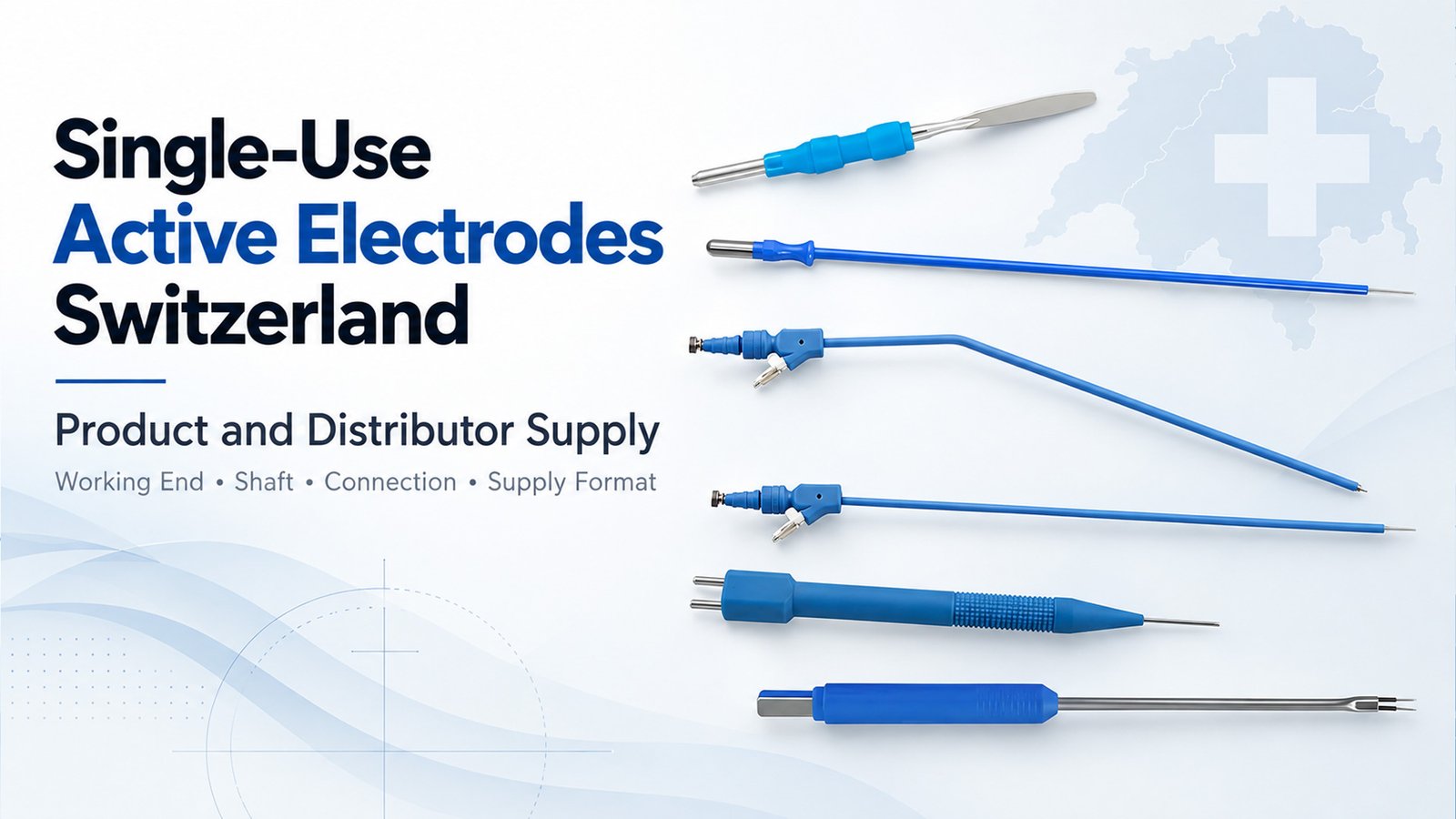
Cosil Instruments supplies active monopolar electrodes in multiple working-end and shaft configurations, including references identified for single use. Swiss hospitals and distributors should confirm the product code, connection, packaging, sterile status and documentation for every selected electrode.
Single-Use Active Electrodes from Cosil Instruments
Cosil’s electrosurgical catalogue contains active monopolar, non-stick and specialised electrode configurations. Individual references vary by working end, shaft diameter, length, angle and use classification.
Working-end options represented across the wider active-electrode range include:
- Needle electrodes
- Knife and blade electrodes
- Lancet electrodes
- Ball electrodes
- Spatula electrodes
- Wire-loop and ribbon-loop electrodes
- Angled and insulated working ends
- Microdissection needle electrodes
Not every working end is available under every shaft, length or single-use configuration. Buyers should shortlist exact catalogue references and request current specifications before ordering.
Compare More Than the Working-End Name
| Specification | Why it matters | What buyers should provide |
| Working-end geometry | Needle, knife, ball, spatula and loop forms are distinct products | Required shape, size and angle |
| Shaft diameter | It affects the handpiece or extension relationship | Exact dimension or approved existing reference |
| Working length | Different access requirements need different configurations | Required measurement in millimetres |
| Connection | The electrode must be reviewed with the handpiece and equipment | Handpiece, cable and generator information |
| Use classification | Single-use and reusable references require different supply models | Required status and supporting-document request |
| Packaging | It affects receiving, stock control and product identification | Packaging, labelling and quantity requirements |
Needle, Knife and Blade Electrodes
Single-use needle electrodes may be requested in straight, angled, insulated or other reference-specific configurations. Needle diameter, exposed working length, shaft and connection should be included in the enquiry.
Knife, blade and lancet products should also remain separately identified. Similar names do not establish identical shape, dimensions or equipment relationships.
Ball, Spatula and Loop Electrodes
Ball electrodes are available in multiple dimensions and may be straight or angled depending on the selected reference. Spatula, wire-loop and ribbon-loop products also vary in size, shape, shaft and intended supply format.
A distributor listing should therefore avoid grouping all active electrodes under a single universal product description. Each reference should retain its measurable specification.
Single-Use and Sterile Are Different Attributes
A product marked for single use is not automatically supplied sterile. Sterile status must be verified through the exact product label, packaging and current documentation.
Swiss buyers should request confirmation of:
- Single-use designation
- Sterile or non-sterile supply status
- Packaging configuration
- Lot or batch identification where applicable
- Shelf-life information where applicable
- Storage conditions
- Current instructions
- Reference-specific supporting documents
Cosil procurement insight: Never transfer the sterile status or shelf-life information of one electrode reference to another, even when both products are described as single-use.
Confirm the Handpiece and Generator Relationship
An active electrode should be reviewed as part of a connected arrangement:
- Electrode working end
- Electrode shaft
- Cautery handpiece interface
- Handpiece cable and generator-end plug
- Generator manufacturer and full model
Physical fit alone does not confirm compatibility. Swiss hospitals and clinics should complete their own technical and clinical review using current product and equipment information.
Supply Planning for Swiss Hospitals and Clinics
Single-use electrode purchasing normally involves recurring stock. Hospitals should identify approved references and estimate demand separately for each working-end and shaft configuration.
A practical supply forecast can include:
- Approved product codes
- Expected monthly or quarterly usage
- Required internal buffer stock
- Number of departments or locations
- Packaging-unit preference
- Documentation required at receiving
- Review schedule for repeat supply
Production and delivery information should be requested for the proposed references and quantity rather than assumed from a previous or unrelated order.
Portfolio Planning for Swiss Distributors
Distributors can build a focused electrode range around actual customer demand. A smaller number of clearly documented references is often easier to quote and manage than a large selection of near-identical working ends.
Each commercial record should include:
- Cosil product code
- Working-end name and dimensions
- Shaft diameter and working length
- Straight or angled configuration
- Single-use status
- Packaging and sterile-status information
- Known handpiece and equipment relationship
Further regional guidance is available through Cosil’s diathermy electrode supply for Switzerland and Swiss diathermy accessory sourcing.
Swiss Documentation Requirements
Swiss buyers should specify the product, regulatory, quality, labelling and language documents required for their intended supply arrangement. Multilingual information should not be assumed.
This article does not claim Swissmedic status, Swiss registration or sterile status across the complete range. Any such statement must be supported by current approved evidence for the exact electrode reference.
Request Active Electrode Information
Send Cosil Instruments:
- Required working-end shape
- Tip dimensions and angle
- Shaft diameter and working length
- Handpiece manufacturer and reference
- Generator manufacturer and model
- Required single-use classification
- Estimated quantity and ordering frequency
- Swiss destination
- Packaging, sterile-status and documentation requirements
Frequently Asked Questions
Which single-use active electrodes does Cosil supply?
Cosil’s catalogue includes single-use references across parts of its active and non-stick electrode range. Working ends, shafts and connections vary by product code.
Are all Cosil single-use active electrodes sterile?
Sterile status should not be assumed. Buyers must request current packaging, label and product evidence for the exact reference.
What working-end shapes are available?
The wider Cosil range includes needle, knife, blade, lancet, ball, spatula, loop and other specialised working ends.
Can electrodes be selected by shaft diameter alone?
No. Working end, length, handpiece interface, connection, generator relationship and use status must also be considered.
Can Swiss distributors request samples?
Distributors can discuss sample requirements for selected references. Availability, packaging, documentation and commercial terms should be confirmed directly.
What should be included in an electrode quotation request?
Include the working end, dimensions, shaft, handpiece, generator, quantity, destination, packaging and required product documents.
Discuss Single-Use Electrode Supply for Switzerland
Cosil Instruments supports hospitals, clinics and distributors sourcing single-use active electrodes in Switzerland. Contact Cosil Instruments with the working end, shaft, equipment details, quantity and documentation requirements to request current specifications and a quotation.