Turn separate instruments and accessories into a product portfolio customers can understand, specify and reorder
Building a commercially useful range of electrosurgical instruments for distributors requires more than collecting products under one catalogue heading. Forceps, electrodes, cautery pencils, generators, cables, plugs and patient return pads must be organised around clear product differences, compatible connections and repeatable ordering information. Cosil Instruments supports medical distributors with manufacturer-direct product supply, catalogue discussions, quotations and OEM or private-label enquiries.
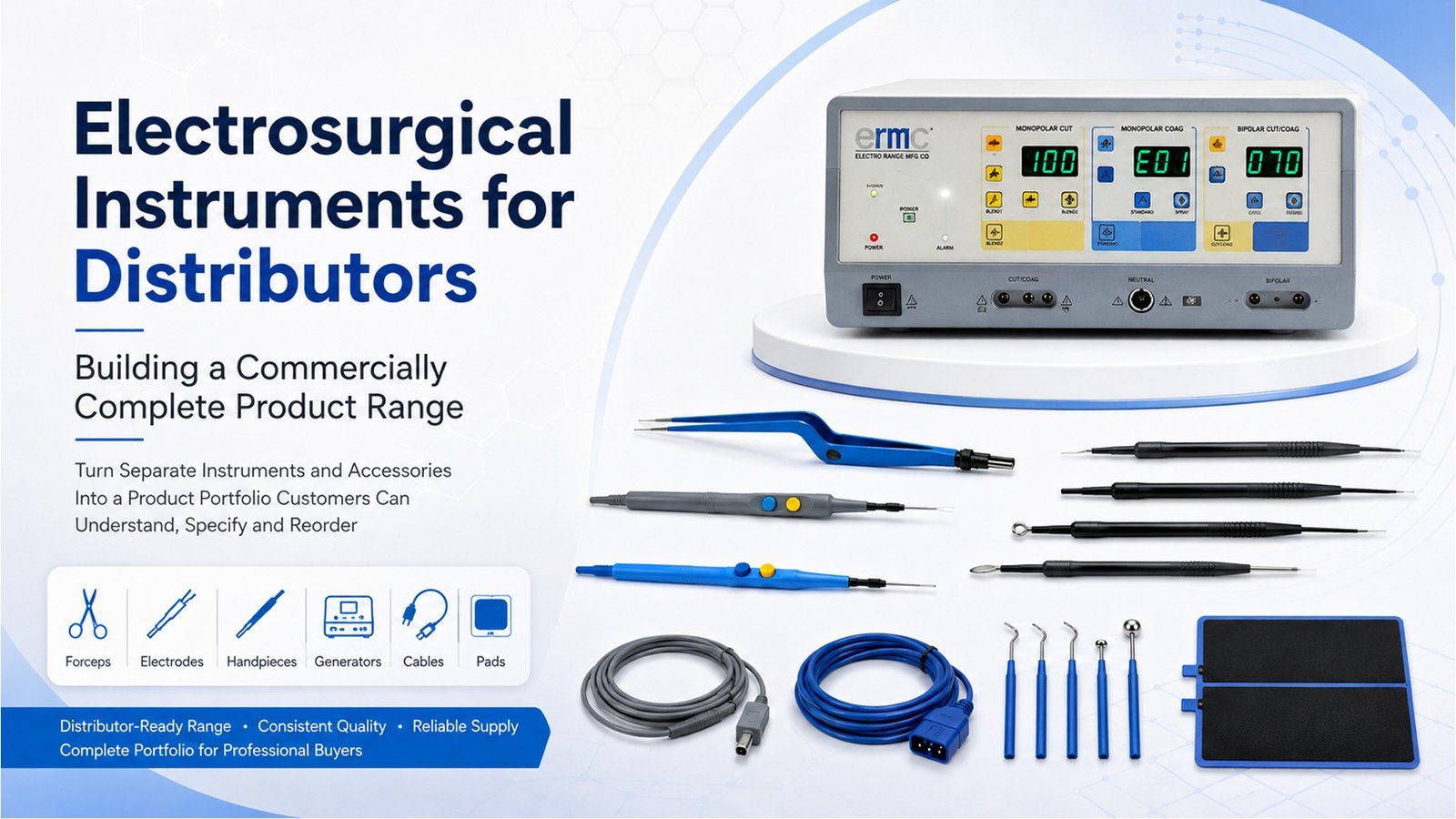
Distributors should build an electrosurgical product range around clearly separated instrument families, use formats, connections and compatible equipment requirements. Cosil Instruments supplies electrosurgical forceps, bipolar instruments, electrodes, cautery handpieces, generators, cables, plugs, return pads and related procedure-pack solutions for professional distribution programmes.
What Makes an Electrosurgical Range Commercially Complete?
A complete range is not necessarily the largest range. It is one that covers recognisable customer requirements without creating unnecessary duplication or confusing product references.
For a distributor, every product should answer four questions:
- Which instrument or accessory family does it belong to?
- What makes it different from the adjacent product?
- Which equipment, cable or connection information must be checked?
- What details are needed to quote and reorder it accurately?
Cosil’s electrosurgical instruments range gives distributors access to connected categories rather than a single isolated product line.
Core Product Families for a Distributor Portfolio
Electrosurgical Insulated Forceps
Reusable insulated forceps can be organised by monopolar or bipolar format, instrument pattern, overall length, tip dimensions, straight or angled construction and cable connection. Distributors should avoid placing visually similar forceps under one general reference.
Standard, Non-Stick and Special Bipolar Instruments
A bipolar range may include standard insulated forceps, non-stick bipolar forceps, irrigation forceps, vessel-sealing instruments, bipolar scissors, titanium forceps and other C-Tech configurations. These products should be separated by construction and connection rather than marketed as interchangeable alternatives.
Single-Use Bipolar Forceps
Cosil’s catalogue includes single-use bipolar forceps with integrated cable in regular and non-stick formats. Patterns include McPherson, Jeweller, Adson, straight and bayonet configurations. Product records should identify the instrument pattern, length, tip, angle, cable and generator-end connector.
Cautery Handpieces and Active Electrodes
Hand-control and foot-control cautery pencils can be supplied alongside compatible active electrodes. Electrode options include needle, knife, blade, ball, spatula, lancet and loop forms, as well as specialised ENT, arthroscopic and laparoscopic families.
Generators and Connected Accessories
Electrosurgical generators should be presented with clear information about their available modes, equipment connections and accessory requirements. Cables, plugs, foot controls and patient return pads should be mapped to compatible configurations instead of being listed as generic accessories.
General Surgical Procedure Packs
Procedure packs can extend a distributor relationship beyond individual instruments. Pack feasibility depends on the required components, quantities, packaging, documentation and forecast demand.
Distributor Product-Range Structure
| Product tier | Typical categories | Distributor objective |
| Core range | Reusable forceps, standard electrodes, handpieces and cables | Cover regularly requested instrument and accessory requirements |
| Single-use range | Integrated-cable bipolar forceps, single-use pencils, electrodes and pads | Support procedure-based supply and repeat consumption |
| Specialist range | Non-stick, irrigation, ENT, arthroscopic and laparoscopic products | Address clearly defined specialist enquiries |
| Equipment range | Generators, controls, cables, plugs and connected accessories | Offer a documented system rather than disconnected products |
| Configured supply | Procedure packs, OEM products and private-label requirements | Develop repeatable account-specific supply programmes |
Build the Range Around Buyer Decisions
Hospitals and clinics rarely begin with a request for every available product. They normally start with a specific instrument, an existing equipment platform or a purchasing problem. Distributor catalogues should therefore support practical filtering.
Filter Forceps by Form and Connection
- Monopolar or bipolar
- Reusable or single-use
- Regular or non-stick
- Straight, angled or bayonet pattern
- Overall length and tip dimensions
- Separate cable or integrated cable
- Generator-end connector
Filter Electrodes by Working End and Access
- Monopolar or bipolar modality
- Needle, knife, ball, blade, loop, hook or spatula
- Shaft diameter and length
- Straight or angled construction
- Standard, ENT, arthroscopic or laparoscopic family
- Single-use or reusable format
- Compatible handpiece and equipment
Filter Equipment by the Complete Configuration
A generator listing should lead to compatible instrument and accessory discussions. Buyers may require handpieces, forceps, cables, electrodes, controls and patient return pads alongside the unit.
Cosil distributor insight: A successful electrosurgical catalogue helps the customer move from procedure or equipment requirement to an exact product reference without relying on visual guesswork.
Create Product Records That Support Repeat Orders
A distributor’s first order may involve detailed communication, but the repeat order should be simpler. This depends on consistent product records.
Each record should include:
- Cosil product reference and distributor stock code
- Complete product name
- Instrument family and use format
- Dimensions and working-end details
- Cable and connector information
- Packaging configuration
- Current approved documentation
- Revision date for controlled information
- Approved alternatives where applicable
A spreadsheet or catalogue description should not become the sole technical authority. It should point purchasing and sales teams towards the current product documentation used for approval.
Compatibility Is Part of the Product, Not an Optional Note
Compatibility information affects whether an electrosurgical product can be offered confidently. A forceps cable, active electrode or cautery pencil must be linked to the correct instrument and generator arrangement.
Distributors should maintain an internal compatibility record containing:
- Generator manufacturer and model
- Relevant equipment socket or connection
- Instrument or handpiece reference
- Cable and connector reference
- Control method
- Applicable accessory requirements
- Documentation used to establish the relationship
Cosil’s electrosurgical instrument procurement guide provides additional context for professional product evaluation.
Documentation and Quality Review
Distributors should request information for the exact product category and reference. A general company document should not be assumed to establish the regulatory or technical status of every item in a catalogue.
Depending on the requirement, buyers may need:
- Product specifications
- Instructions or reprocessing information
- Packaging and labelling details
- Sterile-status information where applicable
- Product-specific quality or conformity documents
- Technical drawings or connector information
- Destination-market documentation
Cosil’s quality policy provides an overview of its approach, while product-specific evidence should be requested separately.
Plan an Entry Range Before Expanding
A distributor entering the category may not need every available reference immediately. A controlled starting range can be developed around existing customer demand.
- Review current hospital and clinic enquiries.
- Identify the most common generator platforms.
- Select core reusable forceps and handpieces.
- Add relevant single-use alternatives.
- Include the cables and connectors required by the selected range.
- Add specialised products only where a defined customer need exists.
- Agree sample, documentation and quotation requirements.
- Expand using actual enquiry and sales information.
This approach protects catalogue clarity and makes forecasting more realistic.
Regional Distribution Planning
United Kingdom
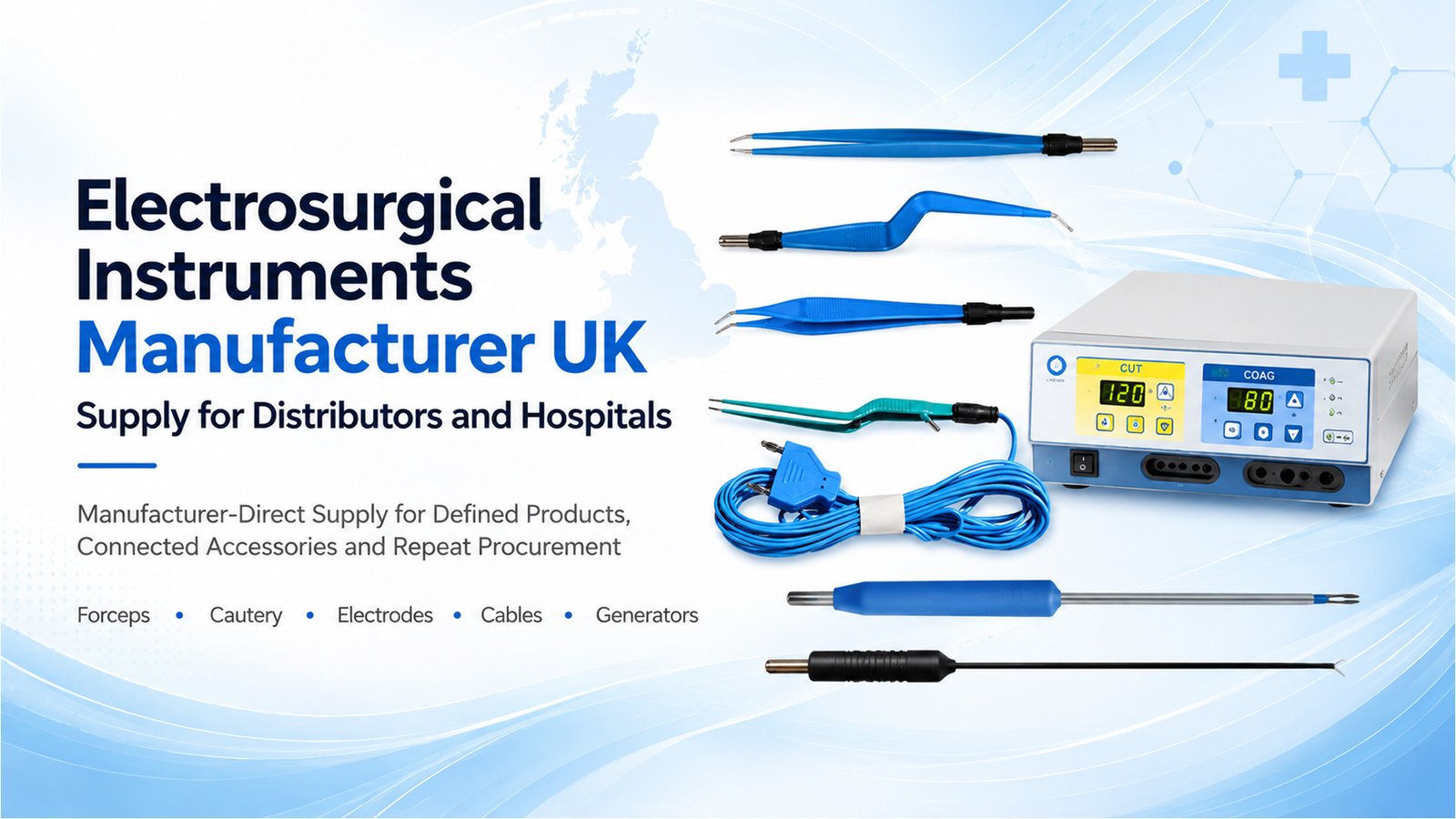
UK distributors may supply hospitals, private clinics, procurement organisations and specialist surgical customers. Product documentation and destination requirements should be reviewed without assuming UK registration, contracts or local stock. Cosil’s UK electrosurgical instrument supply page provides regional commercial information.
Switzerland
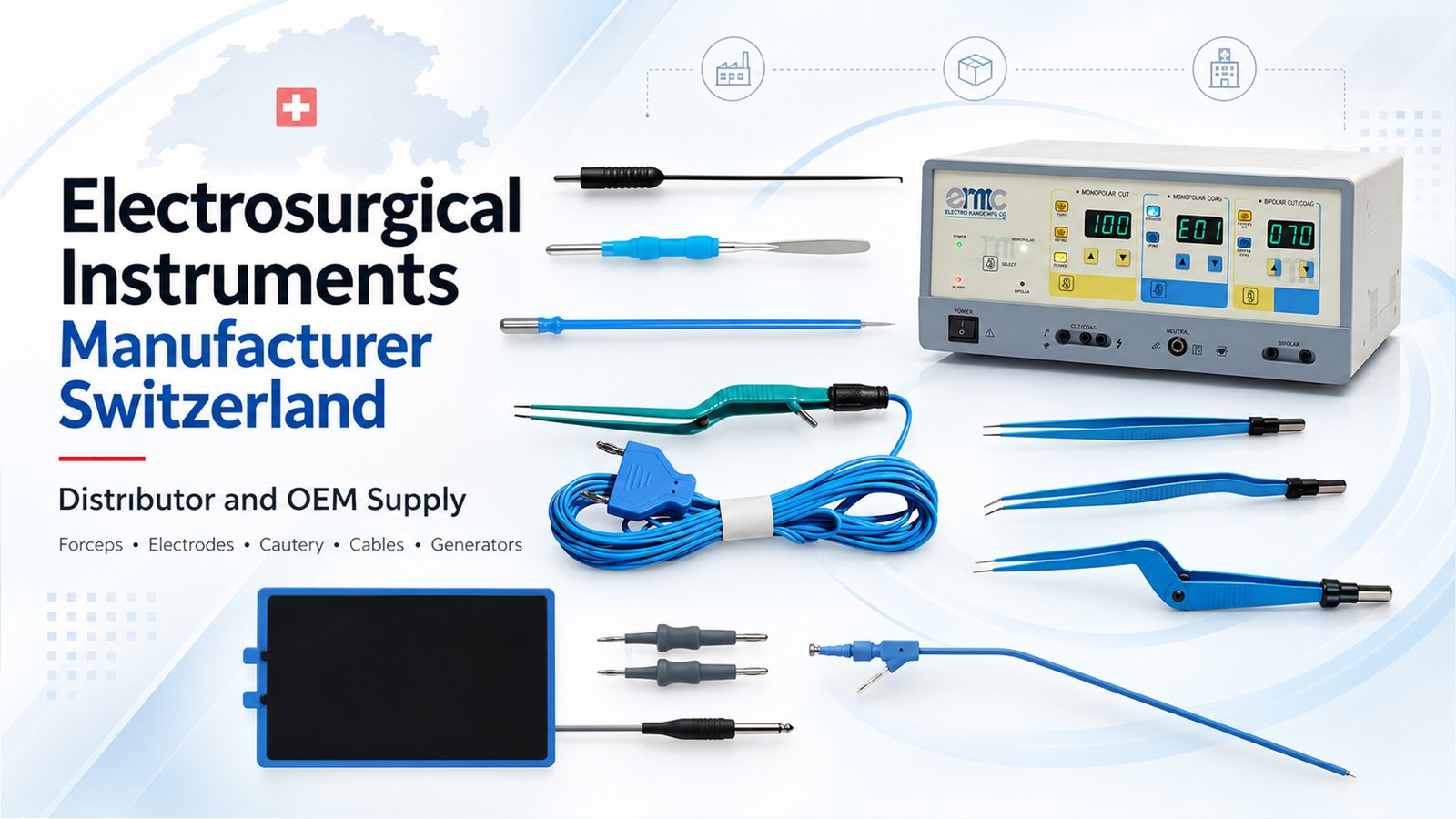
Swiss distributor enquiries should define the customer type, documentation expectations, packaging and language requirements rather than assuming these are standard across every account. Cosil can respond to product and OEM enquiries once the scope is known.
Australia
Australian distributors should provide their product, documentation and destination-market requirements for review. No claim about local inventory or TGA inclusion should be inferred unless supported for the exact product.
OEM and Private-Label Opportunities
Cosil Instruments can review OEM electrosurgical instrument and private-label enquiries. The buyer should provide:
- Product family and controlled specification
- Required variations
- Packaging and branding scope
- Target market
- Documentation requirements
- Forecast order quantity
- Expected repeat-order pattern
Feasibility, minimum quantities and commercial terms should be confirmed through a product-specific discussion rather than assumed from a general manufacturer description.
Request a Distributor Product Proposal
When contacting Cosil, send a structured enquiry containing the required product families, priority references, equipment platforms, connections, quantities, packaging, destination and documentation needs.
Distributors that are still defining their supplier requirements can review Cosil’s medical distributor sourcing guide before preparing the enquiry.
Frequently Asked Questions
Can Cosil supply several electrosurgical product categories?
Yes. The range includes forceps, bipolar instruments, single-use forceps, cautery pencils, electrodes, pads, generators, cables and plugs, alongside procedure-pack discussions.
How should a distributor choose its first product range?
Start with actual customer demand, existing generator platforms and the most frequently requested instruments. Add specialist variations after a clear commercial need has been identified.
Can Cosil support single-use and reusable products?
Yes. Both formats are represented across Cosil’s product categories. The intended use status, packaging and documentation should be confirmed for every reference.
Can distributors request product samples?
Sample requirements can be discussed. Provide the exact references, purpose of evaluation, destination and subsequent quantity expectations so availability and terms can be reviewed.
Can Cosil provide private-label products?
Cosil can review private-label feasibility after receiving the product specification, branding, packaging, documentation, market and forecast-volume requirements.
What should be included in a distributor quotation request?
Include product references or specifications, quantities, connector information, packaging, destination, documentation requirements and any OEM or private-label scope.
Build Your Electrosurgical Product Range with Cosil
Cosil Instruments works with distributors seeking a clearly structured, manufacturer-direct electrosurgical instrument supply programme. To request catalogue information, discuss a starter range or submit a multi-category quotation, contact Cosil Instruments.