What changes when the working end is non-stick, and what UK buyers should confirm before switching 🔥
Every theatre team knows the routine of wiping a charred electrode tip mid-procedure. Tissue residue builds up on the working end, and the scrub practitioner reaches for a tip cleaner. Non-stick diathermy electrodes are designed to reduce that build-up, which is why many UK surgical departments ask for them by name.
For procurement, a switch to non-stick is more than a change of product description. Non-stick electrodes come in their own range of working ends, shaft sizes and use statuses, and their surface needs its own handling and cleaning guidance. A request that simply says “non-stick blade” leaves most of the specification open.
This guide is for UK hospital buyers, independent clinics and distributors sourcing non-stick diathermy electrodes in the UK. It sets out what Cosil Instruments lists in its non-stick range, how to specify a reference precisely and which documents and handling points to settle before approval.
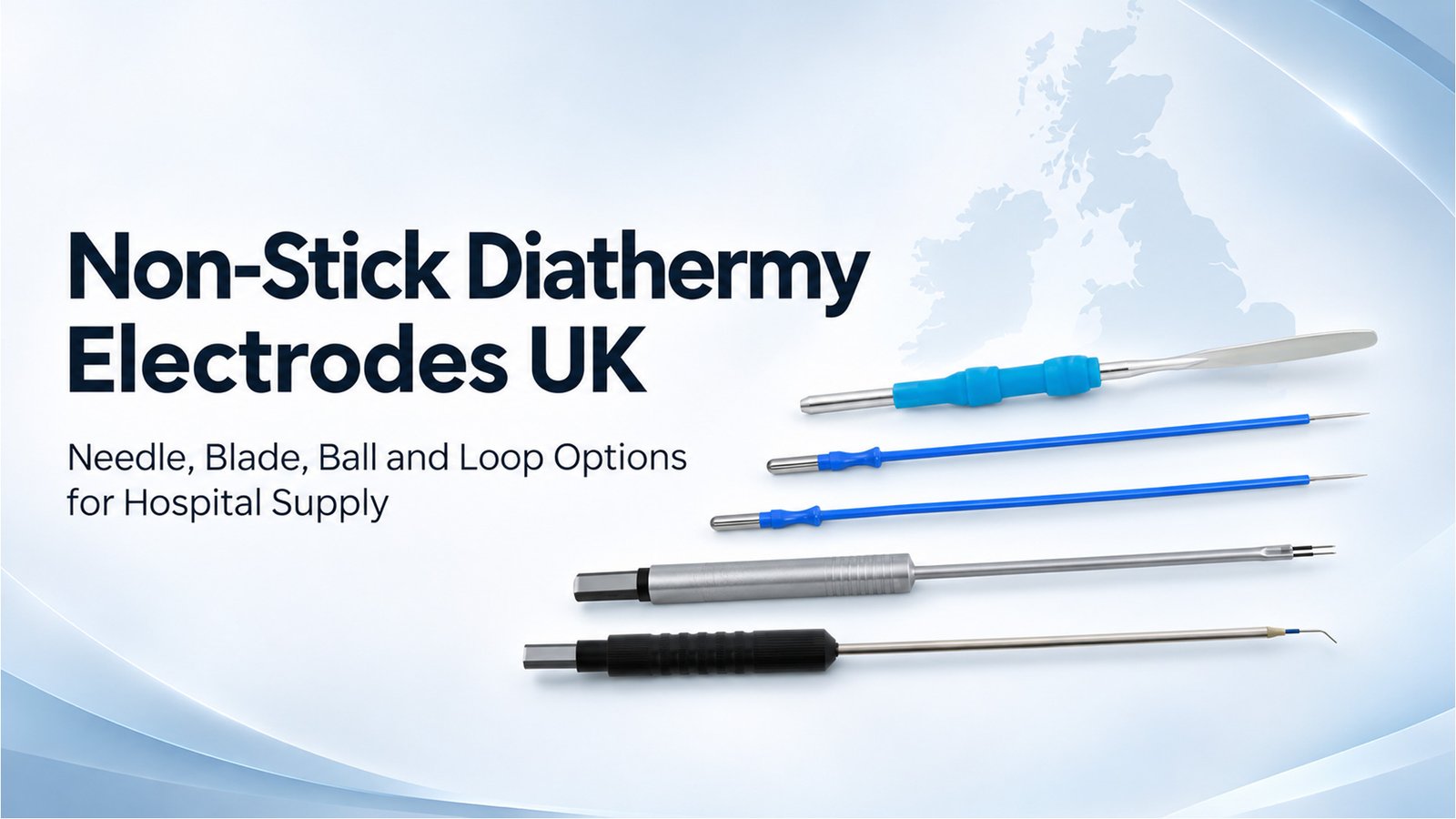
Quick answer: Non-stick diathermy electrodes have a coated working end intended to reduce tissue build-up during monopolar electrosurgery. Cosil’s C-Tech non-stick range lists needle, knife, lancet, blade, ball and wire loop electrodes on 2.38 mm, 2.4 mm and 4 mm shafts, plus insulated angled needles, in multi-use and single-use versions packed in boxes of 50. UK buyers should specify working end, dimensions, shaft, use status and handpiece fit, and obtain handling and reprocessing guidance for the non-stick surface.
Why Departments Ask for Non-Stick Electrodes
During monopolar electrosurgery, tissue can adhere to the electrode’s working end. Build-up may affect how the electrode performs and means the tip needs cleaning during the case. A non-stick coating is intended to reduce that adhesion.
Whether a non-stick electrode is preferred for a given procedure is a clinical decision. Procurement’s role is to translate the request into a specific reference, check it fits the department’s handpieces and make sure the right handling information reaches theatre and sterile services.
Key insight: “Non-stick” describes a surface, not a product. The working end, dimensions and shaft still need to be specified exactly as for a standard electrode.
Cosil’s Non-Stick Electrode Range
| Working end | Shafts listed | Dimensions listed (examples) | Use status |
| Needle, straight | 2.38 mm, 2.4 mm, 4 mm | Fine needle points, e.g. 0.3 mm and 0.5 mm | Multi-use and single-use |
| Knife and blade, straight | 2.38 mm, 4 mm | e.g. 2.5 × 25 mm, 3.0 × 25 mm | Multi-use and single-use |
| Lancet, straight | 4 mm | Lancet profile | Multi-use and single-use |
| Ball, straight | 2.4 mm, 4 mm | e.g. 4 mm and 6 mm ball | Multi-use and single-use |
| Wire loop, straight | 2.4 mm, 4 mm | e.g. 5 mm and 10 mm loops | Multi-use and single-use |
| Needle, insulated, 45° or 90° angled | 1.6 mm and others | Angled insulated needle | Multi-use and single-use |
The non-stick electrodes are listed as autoclavable in their multi-use versions, with a maximum voltage rating (Umax) of 0.5 kVp, and packed in boxes of 50 units. Exact references and dimensions should be confirmed for each item.
For the full electrode range, see our diathermy electrodes for UK buyers.
Specifying a Non-Stick Electrode
A complete request covers:
- Working end: needle, knife, blade, lancet, ball or loop.
- Dimensions: blade width and length, ball diameter, loop size or needle point.
- Shaft diameter:38 mm, 2.4 mm or 4 mm, matched to the pencil.
- Angle: straight, or 45° or 90° for angled insulated needles.
- Use status: multi-use or single-use.
- Pack format and quantities.
- Documents required.
The shaft is the detail most often missed. Our guide to diathermy electrode shaft sizes in the UK explains how to match shafts to handpieces, and our cautery pencils for UK theatres page covers the pencils themselves.
Handling and Cleaning the Non-Stick Surface
A non-stick coating changes how an electrode should be handled. Before approval, ask for guidance on:
- intra-operative cleaning: which tip cleaners or methods are compatible with the coating, and which should be avoided;
- reprocessing (multi-use): cleaning agents, brushes and sterilisation parameters suitable for the coated working end;
- inspection: how to recognise a worn or damaged coating, and when to withdraw the electrode;
- packing: how to protect the working end in trays.
Abrasive tools can damage non-stick surfaces, so the cleaning guidance matters as much as the electrode itself. Cosil also lists single-use tip cleaner pads in 45 × 45 mm, 48 × 48 mm and 50 × 50 mm sizes; confirm their suitability for non-stick tips with the reference documentation.
Key insight: Share the non-stick handling guidance with both theatre and sterile services before the first box is opened. A coating that is scrubbed away no longer does its job.
Multi-Use or Single-Use Non-Stick Electrodes
Multi-use non-stick electrodes suit departments with reliable decontamination capacity and a stable electrode range. Their life depends on careful handling of the coating, so inspection and withdrawal criteria should be part of the approval file.
Single-use non-stick electrodes give a fresh coating for every case and remove reprocessing from the picture. They add recurring cost. Confirm sterile status, packaging and batch identification for the specific reference, and keep single-use electrodes under separate stock codes so they are never sent for reprocessing.
Non-Stick Electrodes Alongside Non-Stick Bipolar Forceps
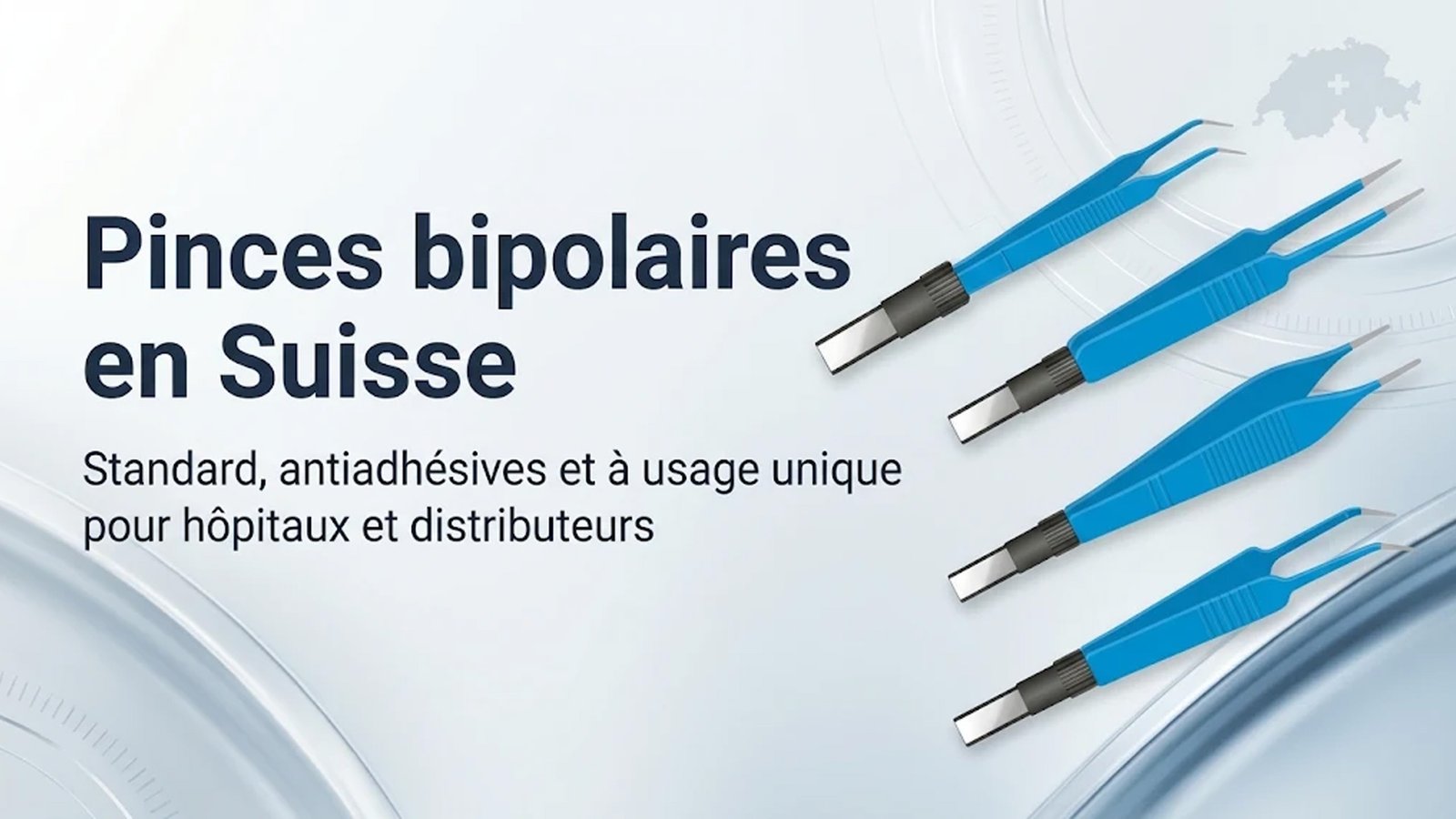
Departments that adopt non-stick electrodes often review non-stick bipolar instruments too. Cosil manufactures non-stick bipolar forceps in reusable and single-use forms; see bipolar forceps for the UK and our comparison of non-stick and special bipolar forceps.
Compatibility and Generator Considerations
A non-stick electrode connects through the cautery pencil to the generator in the same way as a standard electrode. For each reference, record:
- the pencil reference and accepted shaft size;
- the generator manufacturer, model and monopolar mode;
- the electrode’s voltage rating compared with the generator’s documented output.
Our electrosurgery equipment compatibility guide and the page on electrosurgery equipment for the UK cover these checks.
UK Documentation and Regulatory Review
For each non-stick electrode reference, UK buyers should request the declaration of conformity, labelling and instructions for use, plus reprocessing information for multi-use versions. For devices placed on the Great Britain market, UK Responsible Person, MHRA registration and post-market surveillance duties continue to apply. On 21 October 2026 the UK government confirmed it intends to legislate for indefinite recognition of devices CE-marked under the EU MDR; check the current position at tender time.
Cosil’s website refers to CE certification with SGS Belgium as notified body, ISO 13485:2016 and EUDAMED registration, and notes that MDR certification is in progress. Request current certificates and check that their scope covers the electrodes you plan to buy. See our quality policy.
Supply Notes for Hospitals and Distributors
Hospitals should give non-stick electrodes their own stock codes, separate from standard electrodes with the same working end, so a request for one is never filled with the other. Include the shaft size and use status in every description.
Distributors can present non-stick electrodes as a distinct sub-range, sorted by working end and shaft, with the handling guidance available alongside. Electrodes can also be specified within procedure packs for UK hospitals.
Frequently Asked Questions
What is a non-stick diathermy electrode?
It is a monopolar electrode with a coated working end intended to reduce tissue adhesion during electrosurgery. The clinical choice of electrode rests with the surgical team.
Which non-stick electrodes does Cosil supply?
Cosil’s C-Tech non-stick range lists needle, knife, blade, lancet, ball and wire loop electrodes, plus insulated angled needles, on 2.38 mm, 2.4 mm and 4 mm shafts.
Are non-stick electrodes reusable?
Most references are listed in multi-use and single-use versions. Multi-use electrodes are listed as autoclavable and need handling and reprocessing that protect the coating.
How should non-stick tips be cleaned during a procedure?
Follow the reference’s instructions. Abrasive tools can damage the coating, so confirm which tip cleaners or methods are compatible before the electrodes go into use.
Do non-stick electrodes fit standard cautery pencils?
They fit pencils that accept the same shaft diameter. Confirm the pencil’s accepted shaft size and choose the matching reference.
How are non-stick electrodes packed?
Cosil lists them in boxes of 50 units. Confirm pack format, labelling and sterile status for each reference.
Switching to Non-Stick With Confidence
Non-stick electrodes can make a real difference to a theatre’s routine, but only if the right reference is chosen and the coating is handled as intended. UK buyers who specify the working end, shaft and use status precisely, and share handling guidance early, get the benefit without the surprises.
Sourcing non-stick diathermy electrodes for UK hospitals or distribution? Contact Cosil Instruments at sales@cosilinstruments.com or +92 331 732 7777, or send an enquiry, to request product information and a quotation.